






By Jennifer Wolff-Gillispie HWP, LC
EDITOR’S SUMMARY: Matcha differs from other teas in both how it is prepared and how it functions in the body. Rooted in Zen practice and shaped through specific cultivation and processing methods, it concentrates compounds such as L-theanine and catechins that contribute to sustained energy and focused attention. From ritual to physiology, it reveals how a centuries-old tradition translates into measurable effects.
In the familiarity of ritual, the mind is no longer tasked with deciding—only with being. With each step known, there is space to be fully present. Most tea asks very little of you: a bag lowered into hot water, left to steep. Matcha takes a different approach. Its preparation requires attention, and in that process, it invites a kind of balance that is reflected in the effects of the tea itself.
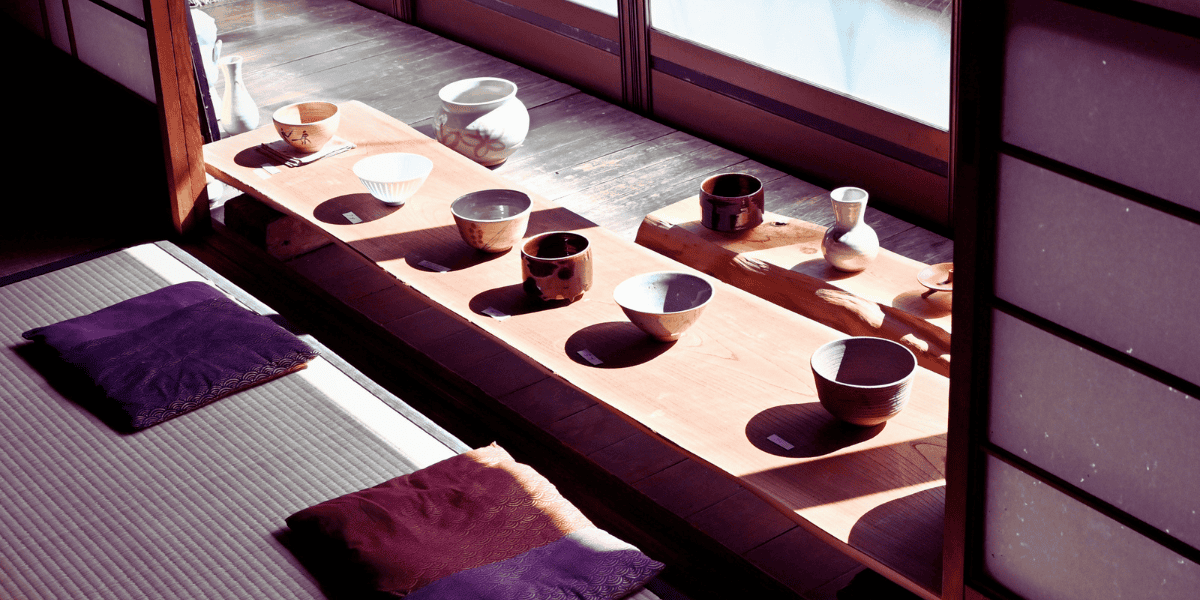
In a formal Japanese ceremony, the experience begins even before the tea room is entered—on the garden path. At a stone basin, you pause to wash your hands and rinse your mouth, acts of purification in both action and speech. Once inside, shoes are removed and you lower your head through a small doorway, leaving behind status, identity and the noise of the outside world. Woven mats meet your feet. The decor is intentionally spare: shoji screens of wood lattice and paper filter the light into a gentle glow. In a single alcove (tokonoma), a scroll hangs—bearing the characters for harmony (wa), respect (kei), or at times a poem honoring the season. Beneath it rests a simple floral arrangement.
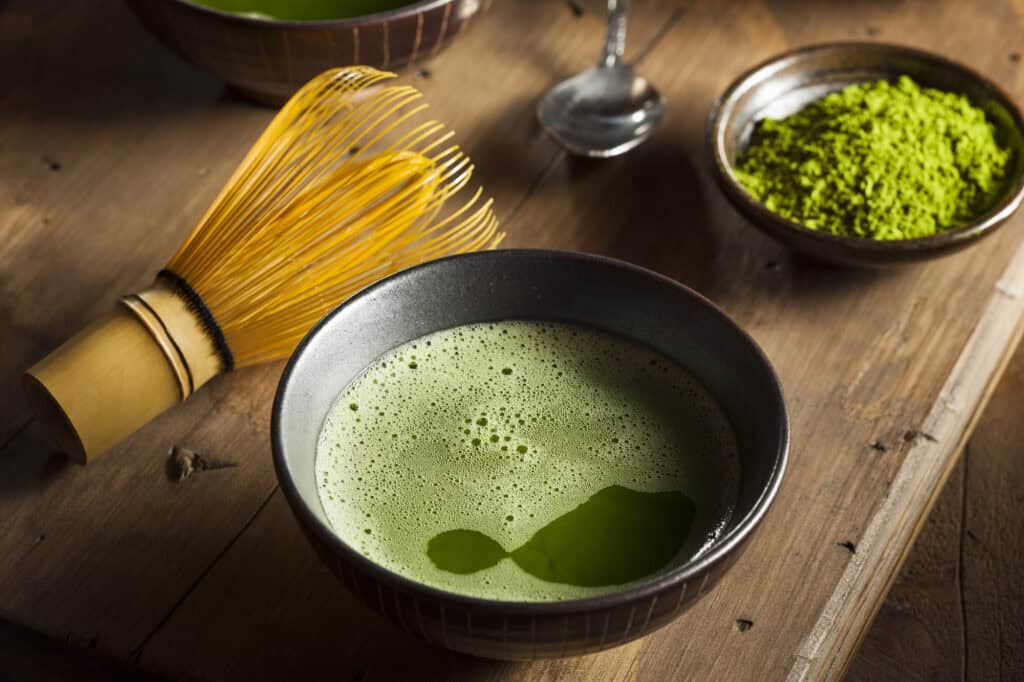
Here, there is no rush. The air is warm with the gentle breath of steam rising from an iron kettle. You take your place, seated on a floor cushion (tatami), opposite the hearth. The host enters and kneels. From your seated position, you bow in greeting. One by one, utensils are wiped with a folded silk cloth—an act of care and respect. Hot water is first ladled into the bare tea bowl (chawan). It is warmed, readied, then emptied and gently dried—in preparation for what comes next. Before you, a small mound of vibrant green powder is placed into the earthen bowl. Its surface is uneven and its glaze imperfect. Using the bamboo scoop (chashaku), the host measures each serving carefully. Fresh hot water is added. The bamboo whisk (chasen) begins its work. The agitation is gentle but steady—bristles against ceramic, water and leaf settling into suspension.
Within moments, a froth appears, almost like the sea’s foam. Before that first sip, you are offered a seasonal sweet (wagashi): a delicate bean paste, a molded rice flour confection, or perhaps, a translucent jelly shaped to echo the time of year—cherry blossom in spring or maple leaf in autumn. Its subtle sweetness primes your palate for what’s to follow. The bowl is turned so that its most beautiful side faces you. You are about to partake in a Japanese matcha tea ritual—known as chanoyu, the art of preparing tea that would later give rise to sadō, or “The Way of Tea”—a philosophy lived daily beyond the walls that hold the ceremony.
You bow in greeting. You lift the bowl with both hands. You turn it slightly—so as not to sip from the front. The bowl touches your lips and you drink. Your palate awakens to notes that are bitter, sweet, complex and alive. Wiping the rim, you turn it back and return it with gratitude. This intimate exchange—host to guest, guest to host—is a gesture of humility, respect and shared presence.
This is matcha, prepared today much the same way it was hundreds of years ago in Japan and first experienced nearly a millennium ago by Buddhist monks. You won’t find it prepared this way at a chain coffee/tea shop, and it’s not typically served sweetened or as a latte with dairy foam. What you have just experienced is not merely tea, but the culmination of centuries of preservation, cultivation, refinement and tradition.
The Long Journey of a Leaf
Matcha’s story curiously begins not in Japan—but in China during the Tang Dynasty (618–907 AD), when tea leaves were once steamed and compressed into cakes for transport and trade along what is now called the Ancient Tea Horse Road. By the Song Dynasty (960–1279 AD), the use of the whole tea leaf was already established, and the practice of grinding it into a fine powder to be whisked with hot water became widespread.
This powdered tea would eventually be brought to Japan in 1191 by the Zen monk Eisai, who returned from study in Chinese monasteries carrying both tea seeds and a philosophy: that tea was not merely a drink—but a tonic for health, longevity and spiritual presence. Eisai wrote in Kissa Yōjōki (“Drinking Tea for Health”): “Tea is the ultimate mental and medical remedy and has the ability to make one’s life more full and complete.”
Matcha soon became embedded in Zen practice—not for enjoyment, but for purpose. Drinking a cup before meditation allowed monks to remain awake and alert, yet inwardly centered for extended periods. By the 16th century, tea master Sen no Rikyū would refine this method into the ritualized practice of chanoyu with a focus on the imperfect, impermanent and incomplete, known as wabi-sabi. In time, this tradition would give rise not just to a beverage, but to a life philosophy rooted in the principles practiced through the ceremony. This evolved into the “Way of Tea” that is known today.
From ceremony to cultivation
Beyond the tranquility of the tea room, the future of this ancient practice is patiently unfolding in the Japanese countryside. Uji, a town in Kyoto—widely regarded as the birthplace of matcha—is considered to produce some of the nation’s finest tea. However, other areas, including Shizuoka (the largest tea-producing region in Japan), Kagoshima, Fukuoka and Aichi, are also known for their high-quality production. In Wazuka, another town in the prefecture of Kyoto—one of Japan’s most renowned matcha-producing regions—multigenerational tea farmers continue to cultivate Camellia sinensis, the plant used to produce green tea (including matcha), as well as black, white and oolong varieties, much as their predecessors have for centuries—though not without growing concern.
The average age of Japan’s tea farmers is now near seventy. With fewer young people entering the profession, tea farming—once a pillar of rural sustainability—faces an uncertain future as many farms have been abandoned. In response, some small farms, instead of relying on their traditional local economy of tea schools, temples and merchants, have begun connecting directly with customers through the internet and social media.
What Matcha Is (and Why It’s Different)
As mentioned before, matcha comes from the same plant—Camellia sinensis—as all true teas. Some teas differ because they are grown in different regions or have added flavors, such as Darjeeling and Earl Grey (which are black teas). However, several critical cultivation and processing steps make matcha unique when compared to standard green tea grown in the sun, called sencha. True matcha is derived from shade-grown leaves called tencha. Unlike other teas, these leaves are then stone-ground into a powder. What sets matcha apart is its three distinct production steps:
1. Shading
For approximately 20–30 days before harvest, matcha plants are covered with cloth or reed screens—shielded from direct sunlight in a process that slows photosynthesis and shifts the plant into a stress-adaptation state.
During this time:
- Chlorophyll production increases
- Amino acids—especially L-theanine—accumulate
- Bitter catechins are balanced by the umami of compounds like L-theanine and glutamic acid
As a result, the leaves become a deeper, more vibrant green and undergo biochemical changes that influence both flavor and physiological effects. These changes deepen the leaf’s color, soften its bitterness and contribute to its distinctive balance of flavor and physiological effect.
2. Processing: Steaming and Stone Grinding
Immediately after harvest, the tencha leaves are:
- Steamed to halt oxidation
- Dried
- Stripped of stems and veins
They are then slowly ground into an ultrafine powder using traditional granite stone mills. This process is intentionally slow to prevent heat buildup that could degrade delicate phytonutrients, amino acids, and volatile compounds. The breakdown of carotenoids, for example, can lead to the development of a stale flavor.
3. Consuming the Whole Leaf
Traditional tea is steeped—meaning water extracts some constituents from the leaf, which is then discarded. Matcha is ingested whole. You are not drinking an infusion; you are consuming the leaf itself. This significantly increases the density of biologically active components delivered in a single serving.
Within the leaf you will find:
- Polyphenols, mostly epigallocatechin gallate (EGCG)
- Chlorophyll
- Amino acids like L-theanine
- Vitamins A, C, E, K and B1, B2, B3 and B6
- Trace minerals
- Fat-soluble phytonutrients such as carotenoids that would otherwise remain trapped in steeped leaves
Matcha’s Secret: Energy Without the Edge
All teas contain caffeine, usually 25–47 milligrams per cup. Matcha’s levels, however, typically range from 35 to 70 milligrams, higher than any other tea. Like all sources of caffeine, the energy you feel comes from the stimulant’s ability to block adenosine receptors in the brain, reducing the sensation of fatigue while increasing the activity of neurotransmitters such as dopamine and norepinephrine. This is why it is known to enhance alertness, improve reaction time and support sustained concentration. It’s also why it feels different.
However, caffeine in isolation, without the supportive compounds mentioned above, may also elevate cortisol levels, increase heart rate and trigger feelings of anxiety in more sensitive individuals. These compounds appear to temper caffeine’s effects by influencing neurotransmitter signaling and slowing absorption—resulting in a more gradual and balanced response.
What makes matcha physiologically distinct from other caffeinated beverages is its naturally high concentration of L-theanine—found almost exclusively in tea and especially abundant in shade-grown varieties like matcha. It can cross the blood-brain barrier and has been shown to increase alpha brain wave activity, which is associated with a state of still, focused awareness. It may also support the production of GABA, a calming neurotransmitter, and help modulate dopamine and serotonin levels within the central nervous system.
In combination, caffeine and L-theanine appear to produce what researchers describe as “calm alertness”—enhancing attention and working memory without overstimulation or jitteriness. With nearly identical levels of caffeine per cup as brewed coffee, matcha offers a different experience—one that favors focus over stimulation. It is this unique neurochemical synergy that allows a relatively high-caffeine beverage to promote a state of focused calm—an effect that historically made matcha well-suited for Zen monks seeking sustained, attentive presence during meditation.
A typical serving of matcha (about 1–2 grams) provides modest amounts of key constituents such as EGCG and L-theanine. While a single cup may offer subtle effects, regular intake—often two to three servings per day—more closely aligns with levels used in research. Unlike isolated supplements, these bioactive elements are delivered together in a naturally balanced form, which may influence how they are absorbed and perceived. This differs from isolated forms, which often deliver higher doses without the same buffering context.
Antioxidant, cellular and metabolic protection
Matcha is especially rich in catechins—plant-derived polyphenols known for their antioxidant activity. Among these, the most extensively studied is EGCG, which has been explored for its potential role in neutralizing reactive oxygen species—unstable molecules that can damage cells, often called free radicals—and enhancing the body’s endogenous defenses, including glutathione.
Oxidative stress—an imbalance between free radicals and the body’s ability to counteract their damaging effects—has been associated with a range of chronic health conditions, including insulin resistance, neurodegenerative disorders, cardiovascular dysfunction and accelerated cellular aging. In addition to directly scavenging free radicals, EGCG has been studied for its ability to influence inflammatory signaling pathways, stabilize cellular membranes and modulate gene expression related to immune and inflammatory responses. It can also inhibit histamine release. Emerging research has also explored EGCG’s role in cancer biology, with studies suggesting it may influence how certain cancer cells grow, survive, and respond to stress—adding another layer to its already complex interaction with cellular processes.
Beyond these antioxidant and anti-inflammatory actions, research on green tea catechins suggests they can influence metabolic function. EGCG has been associated with modest increases in fat oxidation (the use of fat as fuel) and improved post-meal glucose response. Its ability to influence enzymes involved in lipid metabolism and increase norepinephrine availability may enhance energy expenditure. Polyphenols in matcha have been shown to help slow carbohydrate digestion, support insulin receptor sensitivity and reduce glycemic variability.
Detoxification and chlorophyll
Because matcha leaves are shaded prior to harvest, they produce unusually high levels of chlorophyll—the green pigment that plays a central role in photosynthesis in plants and has been studied for its potential biological activity in humans. In response to the reduced light, the tea leaves compensate by producing more chlorophyll per leaf cell in an effort to capture as much light as possible.
Chlorophyll, while made in and for plants, has been investigated for its ability to interact with certain compounds in the body. It has been shown to bind cancer-causing by-products of high-heat cooking as well as aflatoxins produced by mold, support phase II liver detoxification and reduce oxidative burden. Chlorella, spirulina, wheatgrass, alfalfa and dark leafy greens also contain high levels of chlorophyll and are known to exert similar effects.
In the modern environment—characterized by increasing exposure to pollutants, industrial chemicals and microplastics—nutrients that support detoxification and oxidative balance are of growing interest. While matcha is not a detoxifying agent in its own right, its polyphenolic compounds can support the body’s natural detoxification processes. The naturally high chlorophyll content may offer subtle support for the body’s existing detoxification systems when included as part of a nutrient-dense diet.
Considerations
As with any biologically active substance, context matters. Despite its extraordinary benefits, matcha is not appropriate for everyone. Caffeine sensitivity may be an issue for you if you metabolize caffeine more slowly, which can prolong its effects and increase the likelihood of jitteriness, anxiety or sleep disruption. Matcha naturally contains vitamin K, which may interact with anticoagulant medications. Polyphenols may also inhibit iron absorption when consumed with meals, so timing intake away from iron-rich foods may be beneficial.
Studies suggest that compounds in tea, including EGCG, may reduce the absorption of folic acid when consumed at the same time. This effect appears to be more pronounced with synthetic folic acid than with naturally occurring folate. While this is not considered a concern for most people, it may be worth noting during pregnancy or if you have certain genetic variations, including MTHFR, COMT, or folate transporter variants. If you take a folate supplement, consider separating it from tea by a few hours. If tea is part of your daily routine and these genetic factors are present, periodic folate level testing may be helpful. Tea plants may accumulate lead or other contaminants from soil or environmental exposure, so choosing organic and third-party tested sources is recommended.

The final sip
Matcha’s truest potency lies not in measurable outcomes, but in the intentional act of its preparation. In the wisdom of Zen Buddhism, “The taste of Zen and the taste of tea are one.” Centuries ago, monks began drinking matcha to steady the mind and meet the infinite through meditation. In a busy world, an inwardly still mind paired with sustained, balanced energy may provide exactly the tools needed to meet the day ahead with a little more clarity. Instead of the wired rush of coffee, perhaps try something a little more contemplative. It is the same restraint—the subtle, shaded discipline needed to produce matcha that shapes the leaf into something extraordinary—that carries through in the experience.
~
Published on May 07, 2026.
If you’ve found value in this article, please share it!
To support the research and health education of AVFC editorial, please consider making a donation today. Thank you.