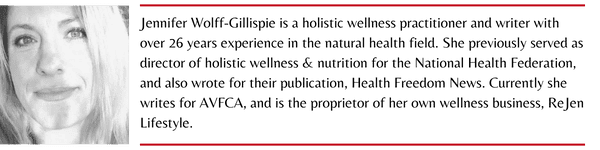







By Jennifer Wolff-Gillispie, HWP, LC
EDITOR’S SUMMARY: Weather modification has progressed from a 1946 laboratory discovery into a global practice with scientific, political, and environmental implications. With more than sixty countries conducting thousands of operations each year, this steady expansion raises important questions about responsibility, scientific limits, and the ethics of altering natural systems—and amplifies the need for greater transparency as these interventions grow.
The desire to control the weather is as old as human civilization. Farmers prayed for rain, shamans danced to summon storms, and leaders imagined ways to tame the sky for survival and power. By the twentieth century, science appeared ready to deliver what myth had only hinted at. In 1946, Vincent Schaefer, working at General Electric, made a striking discovery: dropping dry ice into a freezing chamber produced countless tiny ice crystals. These microscopic seeds gave water vapor something to cling to, and almost instantly, a cloud appeared before his eyes. What began as a laboratory curiosity quickly grew into a global experiment. On November 13 of that year, pilot Curtis Talbot carried the discovery into the sky. Schaefer later recalls the moment:
“I looked toward the rear and was thrilled to see long streamers of snow falling from the base of the cloud through which we had just passed. I shouted to Curt to swing around, and as we did so we passed through a mass of glistening snow crystals! Needless to say, we were quite excited.”
What Schaefer had discovered, and Talbot put into action, was revolutionary; they had successfully engineered the weather. Governments, universities, and private industries seized on the prospect of bending clouds to human will. Programs sprang up across the United States, throughout Europe, in Russia, and on a massive scale in China. The idea that weather could be manipulated was no longer a science fiction tale; it was real life, and governments across the globe have been doing it for nearly 80 years.
Just a decade ago, such claims might have been dismissed as wild conspiracy theories. Yet, as research programs, patents, and official acknowledgments have accumulated, what was once taboo to discuss is now mainstream science and public policy. The story of weather modification is not just about technological progress; it’s about how collective perception shifts, how yesterday’s “impossible” becomes today’s accepted reality, and at what cost?
At its core, weather modification is any attempt to deliberately influence atmospheric conditions. You most often hear about cloud seeding, but the term can also stretch to hail suppression, fog clearing, or even speculative projects that aim to reflect sunlight back into space to cool the planet. Cloud seeding, however, is the pioneer and the workhorse of most weather modification programs. While it may seem to work “like magic,” it doesn’t conjure clouds from empty skies; instead, it works on clouds filled with invisible moisture. These droplets, too tiny to fall on their own, are nudged to release what they are already holding by introducing microscopic particles into the mix. Seeding clouds works much like starting a snowball down a hill. Scientists release tiny agents—often silver iodide—into a cloud, giving the floating water vapor a surface to grab onto. Then, just as a small snowball picks up more flakes as it rolls, these first ice crystals attract additional moisture, growing larger and heavier until they fall from the cloud as rain or snow.
Different seeding materials are chosen to match the type of cloud and the desired outcome. Silver iodide is used for cold clouds because its crystal structure closely mimics ice, encouraging supercooled droplets to freeze and grow into snowflakes or raindrops. Liquid propane can serve a similar role by expanding and cooling rapidly as it’s released, triggering the formation of ice crystals in conditions that are extremely cold and arid. Dry ice (solid carbon dioxide) also works by intensely chilling the surrounding air, but it disperses quickly and is harder to deliver over large areas. In warmer clouds, hygroscopic salts such as sodium chloride or calcium chloride draw water vapor to themselves, pulling moisture into larger droplets until they swell, collide, then merge—and eventually fall as rain.
Planes, rockets, even mountaintop machines—all have been enlisted to coax rain from a reluctant sky. The image of a jet trailing a silver mist is the most iconic, but the principle never changes: get the particles where they can spark precipitation. Aircraft dispersal is the cornerstone, with planes slicing through or above a cloud to release seeding compounds directly into its supercooled heart, while adding more traffic and air pollution to the atmosphere. Ground-based rockets and artillery fire particles upward, letting prevailing winds ferry them into position. In mountainous regions, generators stationed on high ridges send a steady plume skyward, allowing natural currents to carry the seeds into passing clouds.
In parched farmland, a timely rain can mean the difference between survival and ruin. Mountain snowpack feeds municipal water supplies for entire cities downstream. Airports need clear runways to keep travelers safe. Weather has always been both a gift, nourishing life with rain and sunlight, and a gamble, capable of unleashing floods, hurricanes, tornadoes, and drought. And then, suddenly, humans have the power to load the dice. Control precipitation and you don’t just feed crops or uphold travel schedules—you have leverage over economies, conflicts, and entire populations. As weather expert Dr. Jim Fleming exclaims: “The military in the Cold War era, the generals would say that if you can control the weather, you can control the world.”
When Weather Becomes a Tool
One of the most notable instances of this kind of control is the U.S. military’s Operation Popeye during the Vietnam War (1967–1972). This covert operation aimed to extend the monsoon season over specific areas of the Ho Chi Minh Trail by increasing rainfall, thereby disrupting North Vietnamese supply routes through mudslides and road washouts. The campaign involved over 2,300 flights dispersing silver and lead iodide, resulting in a reported 30–45% increase in precipitation over targeted regions. The slogan, chilling in hindsight, was “Make mud, not war,” though in practice it did both. It was never a public line, just an internal catchphrase summarizing the goal of using heavy rain and mud as a tactical obstacle.
The exposure of Operation Popeye in 1974 led to public outcry and subsequent international agreements. In 1977, the United Nations adopted the Environmental Modification Convention (ENMOD), which prohibits the use of environmental modification techniques for hostile purposes. Despite this, concerns persist about the potential military use of weather-altering technologies today. Countries like China have expanded their weather engineering programs, employing cloud seeding to influence regional weather patterns, which, according to reports, are designed “to cover [an] area larger than India.”
More than sixty countries run weather modification programs, conducting thousands of seeding operations each year—a scale that influences regional weather far more often than is widely understood. This expansion has raised valid concerns among neighboring nations about potential geopolitical implications. Experts warn that the militarization of weather could lead to unintended impacts and destabilize international relations. Yet when altered weather crosses borders, the question of who is accountable remains startlingly unresolved.
Beyond officially documented programs, some have raised concerns about technologies such as HAARP (the High-Frequency Active Auroral Research Program) and alleged “chemtrail” operations. Originally designed to study the ionosphere, HAARP has also been the subject of speculation regarding its potential to influence weather patterns on a regional scale. Similarly, persistent contrail formations—often called chemtrails in popular discourse—have sparked public fear that chemicals might be deliberately dispersed to modify weather, though the mainstream narrative does not support these claims. Whether fact, exaggeration, or misunderstanding, these theories illustrate how the notion of controlling the sky captures the imagination and fears of the public, exemplifying the fine line between experimental science, military ambition, and conspiracy thinking in the story of human attempts to manipulate the weather.
Grounded in practical application and far from conspiracy or rumor, the most widely used cloud-seeding method—silver iodide—is generally regarded as safe and effective. Scientists emphasize that its chemical stability prevents it from releasing toxic silver ions under typical environmental conditions. The Desert Research Institute reinforces this assessment, stating:
“…but silver iodide (AgI), not silver ion (Ag+), is used for seeding clouds. Silver iodide retains its form in water and does not break down into the potentially toxic silver ion. When the silver iodide particle falls to the ground with rain or snow, it separates from the water molecules that formed an ice crystal around it, essentially becoming a speck of dust no different from the silver naturally occurring in the soil.”

The Hidden Chemistry of Cloud Seeding
Silver iodide’s poor solubility suggests minimal environmental impact, but real-world conditions are far more complex. Agents that can chemically disassociate silver ions from iodide, like acetone and sodium iodide, or ones that can chelate the silver ion from the silver iodide (sodium thiosulfate, potassium iodide, sodium chloride, potassium cyanide, and ammonium hydroxide) all challenge this assertion. This means that, theoretically, if any of these substances are in the environment, the toxic silver ions can be liberated and may create dangerous conditions.
Rain, soils, and ecosystems near seeding zones may already contain fertilizers, pesticides, herbicides, pollutants, acids and living organisms. These can potentially transform silver iodide into reactive, biologically available forms of silver, which can stress aquatic microorganisms, invertebrates, soil microbial communities, and humans. Even at low concentrations, repeated applications over years or decades could lead to cumulative ecological impacts and bioaccumulation in plants, fish, birds, reptiles and mammals.
While the National Oceanic and Atmospheric Administration “is required by law to track weather modification activities by others, including cloud seeding” through a self-reporting program, it does not investigate or research any outcomes, putting the burden of proof squarely on independent organizations to determine if there is a danger. Much of this work is carried out through private contractors and local agencies, leaving data inconsistent, incomplete, or shielded from meaningful public scrutiny.
From local interventions to global effects
Atmospheric intervention has been shown to produce modest increases in precipitation—often 5–15% in targeted areas—which has driven investments from ski resorts and agricultural regions. Although the thought of weather modification is alluring—promising ways to safeguard the food supply and boost tourism in certain regions—the potential for disaster is real. These efforts come with trade-offs: clouds carry finite moisture, so enhancing rainfall in one area may deprive downwind regions, intensifying drought elsewhere. Seeding at the wrong moment can inadvertently intensify hail, shift storm tracks, or prolong extreme weather. Beyond local applications, proposals for stratospheric aerosol injection aim to cool the planet by scattering reflective particles on a global scale, raising profound questions about long-term and regional reverberations.
Expanding beyond silver iodide, metals such as aluminum, strontium and barium have been explored for their reflective properties in experimental weather modification, solar radiation management and pyrotechnic cloud dispersal. By scattering sunlight, the selected particles could theoretically cool the Earth, mimicking the temporary effects of volcanic eruptions. Yet the risks are significant: aluminum can acidify soils and disrupt plant nutrients, strontium can accumulate in bones and soluble barium may affect cardiovascular and nervous systems in animals and humans. Once released, these elements persist in the environment, disperse widely, and are difficult to remove, with potential consequences for rainfall patterns, ozone chemistry, and ecosystems far beyond the targeted areas.
Metals such as aluminum are even implicated as a source of combustibility in wildfires. While potentially mitigating some local effects, such interventions carry profound uncertainties: altering stratospheric temperatures, depleting ozone, and shifting precipitation patterns globally, which could worsen droughts or floods for nations far from the intervention sites. Predicting such outcomes through computer models is inherently limited, as even small perturbations in atmospheric chemistry or cloud dynamics can cascade into unpredictable weather events. Oversight and governance have struggled to keep pace with the rapid expansion of weather modification technologies. No binding global treaties regulate stratospheric geoengineering, and the legal framework for peaceful cloud seeding is patchy at best.
While the 1977 ENMOD Treaty bans environmental modification as a weapon of war, there is little oversight for civilian use, which may impact neighboring nations, inadvertently causing conflict and war. Each intervention is a collision of chemistry and ecosystems, ambition and politics. Every particle released leaves traces whose ecological and geopolitical fallout is only beginning to be understood, placing humanity on the threshold of an era where controlling the weather could become both an environmental disaster and a flashpoint for international conflict.

The question returns to you
When you nudge clouds or coax rain from the sky, you quickly realize that every interference with nature carries repercussions you cannot fully foresee. And beyond the measurable effects, one central question lingers: what does it mean to assume authority over forces you barely understand? Every seeding operation, every particle released, is an experiment with outcomes that extend far beyond predictions—through ecosystems, through weather systems and across international borders. The promise of bending the sky to humanity carries with it a profound responsibility that you may not be ready for. It challenges you to consider whether the knowledge and power that are wielded are matched by the wisdom to use them well.
Now more than ever, it is up to you—as a citizen, a steward of the environment and a participant in the shared fate of this planet—to demand transparency, oversight and restraint. Advocate for independent research, question interventions that alter ecosystems and weather patterns and ensure that decisions are guided by science, ethics and long-term effects, not short-term gain. Florida is the first state in the nation to pass legislation banning weather modification. Senate Bill 56—Geoengineering and Weather Modification Activities—approved on June 20, 2025, marks a turning point and proof that collective action and informed policymaking can draw a firm line around humanity’s reach into nature. It’s also a reminder that you have the power to influence the forces shaping your world. While the sky may seem limitless, the choices you make today about how these technologies are governed will shape the world future generations inherit.
~
Published on November 20, 2025.
If you’ve found value in this article, please share it!
To support the research and health education of AVFC editorial, please consider making a donation today. Thank you.