







Written by Sarah Campise Hallier
Edited by Nicki Steinberger, Ph.D.
EDITOR’S SUMMARY: Circumcision remains a routine part of newborn care in many U.S. hospitals, despite declining rates and ongoing debate over its medical necessity. Its rise as a standard practice was shaped by history, cultural norms and evolving medical claims about prevention. Current research points to potential benefits in certain contexts while also raising questions about complications, bodily autonomy and informed consent. As more parents revisit long-standing assumptions, the issue increasingly reflects a broader tension between tradition, prevention and personal choice.
Circumcision is one of the most commonly performed surgeries in the United States, yet it remains one of the least discussed. For generations, American parents have been convinced it’s a standard part of newborn care, sometimes nothing more than another checkmark on a hospital form. But beneath that decision is a long and complicated history shaped by religion, morality, early fears about disease, changing medical research, financial incentives and powerful cultural habits. Circumcision in the United States carries historical, sociological, economic and ethical implications that extend far beyond the procedure itself. To understand where things stand today, it helps to trace how it became embedded in modern healthcare.
From Sacred Ritual to Institutional Norm
Circumcision dates back to early civilizations. Archaeological evidence from Egypt, including tomb carvings and mummified remains, suggests it was practiced as early as 2300 BC, most likely as a transition into adulthood. In Judaism, circumcision is explicitly established in the Torah, in the book of Genesis, as a covenant between God and Abraham, formalized through the brit milah performed on the eighth day of life. In Islam, circumcision became widely adopted as a religious and cultural practice—not explicitly mandated in the Qur’an, but drawn from the Hadith, which records the sayings and teachings of the Prophet Muhammad. In these contexts, circumcision carried religious, cultural and communal significance. Outside those communities, it remained relatively uncommon until it was later medicalized in the West.
Its shift from religious tradition to medical intervention did not begin with infectious disease research. It began in the Victorian era, when medicine was often used to enforce moral and social norms. In the late nineteenth century, physicians promoted circumcision as a deterrent to masturbation, based on the belief that removing the foreskin would reduce sensitivity and make self-stimulation less appealing. At the time, they believed masturbation caused insanity, epilepsy, and moral decay. Among them was Dr. John Harvey Kellogg, who advocated circumcision without anesthesia, arguing that the pain itself would discourage sexual self-stimulation in boys. Today, those views are widely recognized as unscientific, yet they helped legitimize the procedure within mainstream medicine.
As hospital births became more common in the early twentieth century, circumcision migrated from religious ritual to a common, institutional practice. Historian David L. Gollaher, in his book, “Circumcision: A History of the World’s Most Controversial Surgery,” documents how physicians began framing circumcision as hygienic and preventative. At the time, the foreskin was increasingly viewed as a site where bacteria and secretions could accumulate, reinforcing concerns about infection and cleanliness during the rise of germ theory in the late nineteenth and early twentieth centuries.
During this period, ideas about cleanliness became closely tied to morality, discipline and social standing. Personal hygiene was seen as a reflection of character, and these beliefs coincided with broader public health efforts to prevent infectious diseases such as tuberculosis, cholera and sexually transmitted infections at a time when antibiotics did not yet exist. In that environment, surgical removal of the foreskin was framed as a prophylactic measure—a way to eliminate a perceived source of infection before problems emerged.
By the mid-twentieth century, circumcision had become normalized in the United States. Although it was never mandated, entering a hospital to give birth often came with the expectation that circumcision was part of newborn care. Rates climbed dramatically after World War II and by the 1960s and ‘70s, estimates suggest that between 80 and 90 percent of American newborn boys were circumcised. Yet this increase was not driven by randomized controlled trials demonstrating overwhelming medical necessity. It was reinforced by professional consensus among doctors, hospitals and insurers that framed the procedure as preventative medicine. As childbirth and postpartum services shifted from the home to hospitals, circumcision became easier to institutionalize. What had once been far less common outside religious communities increasingly became part of hospital protocols, often presented to parents as a standard option.
Today, the United States remains an outlier among developed nations, where routine newborn circumcision is far less common outside of religious communities. According to data from the Centers for Disease Control and Prevention (CDC), newborn circumcision rates in the U.S. currently range between 55 and 65 percent, marking a decline from the mid-twentieth century, when estimates were as high as 80 to 90 percent. This is partly due to medical organizations like the American Academy of Pediatrics (AAP) emphasizing the importance of parental decision-making in the process.
Though patterns vary significantly by region, parts of the Midwest and South have historically exceeded 70 percent, while rates in the West and Northeast have declined to below 40 percent in some areas. These differences are shaped by a combination of policy, culture, and demographics. Circumcision rates also tend to be lower in many Hispanic and immigrant communities than among non-Hispanic white populations. A recent Johns Hopkins study analyzing national hospital data from 2012 to 2022 found that neonatal circumcision rates fell most among families in the highest-income ZIP codes and among those with private insurance. In these groups, rates dropped from 59.4 percent to 51.1 percent and from 64.2 percent to 56.3 percent over the decade.
In the United States, newborn circumcision typically costs between $300 and $500 for privately insured patients. While the amount per case is modest, the volume isn’t, resulting in a procedure that has become a common, reimbursable component of newborn care in hospitals. In many other developed countries, by contrast, medical organizations have not adopted widespread newborn circumcision as a standard public health measure.
What the Procedure Involves—and What the Evidence Says
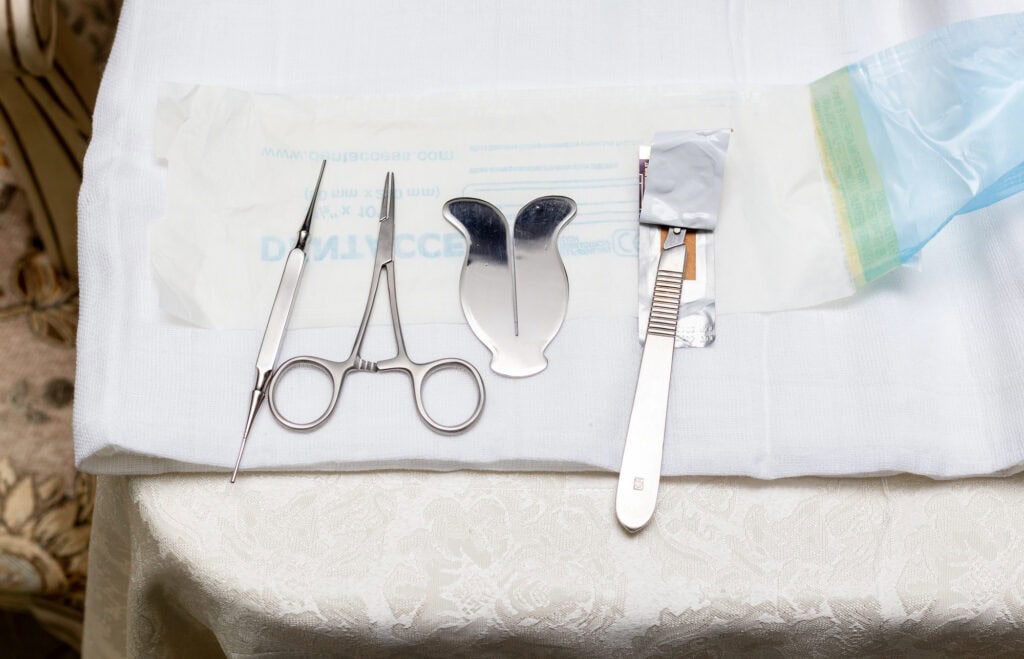
Circumcision is presented as a quick surgery, typically performed within the first week of life. In a hospital or medical setting (or sometimes at home), the baby is secured in a device that limits movement of the arms and legs. A local anesthetic is administered—the AAP recommends its use specifically because the procedure is painful. While pain management is now considered standard practice, research shows that anesthesia reduces pain rather than eliminating it entirely, and infants may still exhibit measurable stress responses during the procedure depending on the method used.
The foreskin, also called the prepuce, is then separated from the glans and removed using a clamp device. It is not excess skin. This specialized tissue protects the glans and contains nerve endings. Once removed, it cannot be restored.
Techniques may differ in religious or cultural settings. In the Jewish tradition, the procedure is performed by a trained practitioner called a mohel. In Muslim communities, practice varies by country and family resources—it may be performed in a clinic or through community-based practitioners, depending on local customs. The surgery itself typically lasts less than ten minutes, and complete healing usually takes several weeks.
Even though the surgery is brief, research shows that babies respond to it. Studies published in journals such as Pediatrics and JAMA have documented measurable physiological stress responses during circumcision, including increased heart rate, elevated stress hormones and, in some cases, fluctuations in oxygen levels, vomiting and skin color changes. Organizations such as the AAP have weighed these short-term stress responses against potential long-term health benefits. The AAP convened a Task Force on Circumcision in 2007 and again in 2012. In its 2012 policy statement, they concluded:
“…evaluation of current evidence indicates that the health benefits of newborn male circumcision outweigh the risks, and the benefits of newborn male circumcision justify access to this procedure for those families who choose it.”
At the same time, the organization stopped short of recommending routine circumcision for all newborns, emphasizing that “Parents should determine what is in the best interest of their child.” The CDC has similarly emphasized potential health benefits while stopping short of recommending universal newborn circumcision. However, both organizations acknowledge that their conclusions depend on how risks and benefits are defined, framed and interpreted.
One frequently cited benefit of circumcision is a reduced risk of urinary tract infections (UTIs) during infancy. Some studies show lower UTI rates among circumcised boys, but the absolute risk remains low in both groups. Critics note that infant UTIs are relatively uncommon, typically treatable with antibiotics and may not justify routine surgery on healthy newborns. Researchers have also pointed out that a large number of circumcisions may be needed to prevent a single UTI hospitalization, adding important context that is often missing from broader prevention claims.
Large randomized controlled trials conducted in sub-Saharan Africa demonstrated that adult male circumcision reduces male-to-female HIV transmission by approximately 50 to 60 percent in high-prevalence settings. As a result, the World Health Organization (WHO) and UNAIDS endorse voluntary adult circumcision as part of comprehensive HIV prevention strategies in certain African countries. However, these findings have important limitations in the U.S. context. HIV prevalence is lower in the United States than in many of the African regions studied, condom use and safe sexual practices remain primary tools for prevention, and the trials were conducted in consenting adult men—not newborns.
Some studies have also explored whether circumcision may modestly reduce the risk of certain sexually transmitted infections, including HPV and herpes, though findings vary and these potential benefits are typically discussed in the context of sexually active adults—not babies. Penile cancer is also cited as a reason to circumcise newborns. Yet penile cancer is extremely rare in developed countries, with an incidence of roughly 1 case per 100,000 men annually in the United States.
Risks and Medical Considerations
Complications from circumcision are often described as unusual, and severe long-term issues as rare, but it is still surgery on a healthy baby, and problems do happen. Large U.S. studies suggest that about 0.5 percent of newborns experience some kind of complication, with estimates ranging from roughly 0.01 percent to 2 percent, depending on how researchers define “complication.” One analysis found early problems in about 1.5 percent of newborns and closer to 3 percent in boys circumcised after infancy, indicating that risk increases when the procedure is performed later in life. While most circumcisions are performed at birth, the procedure is also done later due to cultural or religious reasons, parental decisions as a child ages, adult choice, or medical conditions such as phimosis.
A systematic review of over six thousand articles on circumcision in 2021 resulted in the researchers’ conclusion:
“Complications from neonatal male circumcisions are common and healthcare providers need to be better informed of the potential complications of the surgery so that they can more effectively counsel their patients about potential risks, likelihood of complications and what can be done to prevent them.”
Another U.S. study found that approximately 0.3 percent of children who had elective circumcision were readmitted to the hospital within a week, and about 0.1 percent needed a second operation. Follow-up surgeries are typically performed to address complications from the initial procedure. While these percentages are small, they represent outcomes directly resulting from an intervention on otherwise healthy tissue:
Physical injury: The most immediate complications include bleeding, infection, improper healing, and in rare cases, death. While often described as minor, bleeding can require intervention, and infections in newborns can escalate quickly. Even when early recovery appears smooth, some issues do not become visible until later in childhood or even puberty. Although rare, catastrophic outcomes are documented in medical literature. Excessive tissue removal, accidental injury to the glans, necrosis from compromised blood supply, and even partial or total amputation have been reported.
Short- and long-term impacts: Follow-up problems can include adhesions, where remaining skin sticks to the glans, skin bridges that require surgical separation and meatal stenosis, a narrowing of the opening at the tip of the penis that can make urination painful and may require corrective surgery. Some studies show that 7 to 20 percent of circumcised males develop some degree of this narrowing. In severe cases, it can cause an upward urine stream, difficulty directing urine and prolonged time needed to empty the bladder.
Phimosis: One of the most commonly cited medical justifications for circumcision is phimosis, and it is frequently misunderstood. Phimosis simply means that the foreskin cannot be retracted over the glans. In infancy and early childhood, this is not a disease. Nearly all male infants are born with a foreskin that is naturally attached to the glans and is nonretractable. This is called physiologic phimosis, and is a normal stage of development. Studies show that only about half of boys can fully retract the foreskin by age 10, and full retractability may not occur until adolescence. Nonretractability in childhood is expected and is not a medical problem. Proper hygiene for uncircumcised boys is generally straightforward. Pediatric guidance advises against forcibly retracting the foreskin in infancy, as it naturally separates over time. Once retractable, routine washing with water is typically sufficient.
True pathologic phimosis is uncommon and typically results from scarring, forced retraction, infection or chronic inflammation. In these cases, pediatric research supports non-surgical treatment. Topical steroid cream, which is widely used, has been shown in clinical studies to be successful in a large majority of cases. Circumcision may be considered only if conservative treatments fail, and even then it is rarely medically urgent.
One aspect that is rarely discussed is how circumcision may affect sensation and sexual experience later in life. The foreskin contains nerve endings and serves a functional role in protection and natural lubrication. Its removal means eliminating tissue that plays a role in sexual response and function. Certain studies show that uncircumcised men describe a heightened level of sensitivity, while some circumcised men report feeling satisfied but still question what was lost.
Culture and Incentives
If circumcision were widely viewed as medically necessary in developed countries, rates would likely be more consistent across comparable healthcare systems. But outside of religious communities, routine newborn circumcision remains far less common across much of Europe and in countries such as Canada, Australia and New Zealand. Culture plays a powerful role in sustaining the practice. Parents may be influenced by what feels familiar within their family or community, including whether a father was circumcised or whether their child is expected to resemble other boys around them.
Some research suggests that concerns about being perceived as different from peers may influence caregivers’ choices. Parents may worry that their child will feel different in settings like locker rooms, camps or other peer environments. A Reuters report noted that among boys who experienced teasing about their bodies, many of the comments centered on genital appearance, including whether or not they were circumcised. In communities where circumcision rates remain high, uncircumcised boys may feel self-conscious about standing out, while some circumcised men later report feelings of loss, decreased sensitivity or frustration that the decision was made for them. Social pressure can cut in multiple directions.
According to a study published through DePaul University’s School of Nursing, “The desire for a child’s penis to aesthetically resemble his father’s was the primary motivating factor in parental decision-making.” The fact that the procedure is typically offered while the mother is still in the hospital is another factor. Research on parental decision-making suggests the choice is often shaped by social expectations, cultural norms, geography and the circumstances of birth itself.
Economics is also part of the story. In the U.S., circumcision is reimbursable, with hospitals and physicians receiving payments for performing it. In countries where national health systems do not routinely reimburse non-therapeutic circumcision, rates are significantly lower. Ethically, circumcision raises questions that extend beyond epidemiology. Most pediatric medical interventions are justified by urgent medical need or clear evidence of preventing significant harm. Routine circumcision presents a gray area. The possible benefits are statistical likelihoods that relate mostly to conditions that might arise later in life, not immediate medical needs in infancy.
The ethical conversation becomes more complex when placed alongside global condemnation of female genital cutting. Female genital mutilation (FGM) is widely prohibited and recognized internationally as a human rights violation—condemned because it removes healthy tissue from minors who cannot consent, regardless of cultural justification. Legal bans, global campaigns, and strong language from medical and human rights organizations have framed it as a matter of bodily integrity. According to the WHO, “FGM has no health benefits, and it harms girls and women in many ways.” While these procedures differ significantly in severity, cultural context and long-term health consequences, both raise broader questions about bodily autonomy when irreversible decisions are made for minors who cannot consent. As historian David L. Gollaher observed:
“Indeed, as the history of female circumcision suggests, if male circumcision were confined to developing nations, it would by now have emerged as an international cause célèbre, stirring passionate opposition from feminists, physicians, politicians and the global human rights community.”
Gollaher’s point is jarring. In one context, ritual genital cutting is seen as a grave human rights violation. In another, it is considered routine medical care. That disparity raises a deeper question: how much of your comfort with a practice depends on where it occurs and who performs it? That conflict between a parent’s right to make decisions for their child and a child’s right to bodily integrity is at the heart of this debate.

Rebuilding the Framework Around Choice
Advocacy, at its core, begins with a simple conversation of facts and numbers. Acknowledging that in much of the developed world, public health systems function without routine infant circumcision is a meaningful starting point. But in practice, the conversation is rarely that easy. Consent should be fully informed and unhurried. Parents need clear, evidence-based information presented in language that is easy to read and understand. Decisions should never feel rushed, especially during the vulnerable postpartum window. Instead, educational materials should be introduced during prenatal care, when families have time to consider their options thoughtfully.
Public health messaging can remain accurate without being distorted. Circumcision has been shown to lower the risk of HIV transmission through sex in regions where HIV prevalence is high. Urinary tract infections are slightly less common in circumcised infants, though they are uncommon in either group. Penile cancer is rare in both circumcised and uncircumcised men. All of these facts can be true simultaneously without any of them being overstated. Long-term research on sexual function, pain response and emotional outcomes remains limited and warrants further study. How other countries approach this issue also offers an important comparative perspective that the U.S. medical community would benefit from examining more closely.
Dr. Aaron Tobian, professor of pathology at the Johns Hopkins University School of Medicine, has noted that “multiple factors may contribute to the decline in the number of neonates circumcised.” Among them, he pointed to growing skepticism toward medical recommendations, as well as cultural and policy shifts. Hispanic families, who historically report lower circumcision rates, represent one of the fastest-growing populations in the United States. And by 2011, seventeen states had ended Medicaid coverage for routine newborn circumcision, creating financial barriers that likely contributed to the downward trend.
Research from the Pew Research Center shows that a growing number of Americans turn to the internet for health information before making medical decisions. For new parents, this can mean encountering a wider range of perspectives—including differing medical opinions, personal experiences and viewpoints that challenge long-standing practices. Social media has also helped parents ask deeper questions before consenting to surgery on their newborn. As a result, decisions that may once have been made quickly under hospital pressure are now being considered earlier and with greater scrutiny.
Asking pediatricians direct questions about both benefits and risks, reading relevant research and understanding how this procedure is viewed in other countries can provide valuable perspective. Most importantly, circumcision deserves more than a quick signature on a hospital form or a hurried glance at a pamphlet. It deserves time, careful thought and honest information, so that whatever choice is made, it is a considered one.
~
Published on May 14, 2026.
If you’ve found value in this article, please share it!
To support the research and health education of AVFC editorial, please consider making a donation today. Thank you.