








By Sarah Campise Hallier
EDITOR’S SUMMARY: Thermal paper receipts contain bisphenol compounds used in heat-activated coatings that allow receipts to print without ink. These chemicals, including BPA and BPS, can transfer to skin during routine handling, raising concerns about repeated exposure—particularly for retail workers who handle receipts throughout the day. Industry shifts from BPA to closely related substitutes have complicated regulatory efforts, as many replacement chemicals remain less studied. Emerging policies and practical steps to reduce contact with receipt paper are also examined.
That retail store receipt you just tucked into your purse carries more than a record of your purchase. Printed on thermal paper—a heat-activated material—it contains chemicals you cannot see, smell or feel. The coating transfers easily, and studies suggest it can pass through your skin. Unlike plastics that must be heated or worn down, receipts can shed chemicals the moment they touch your fingers, making even brief contact a potential source of absorption. Researchers have spent decades studying what these coatings contain and why they matter for human health.
Bisphenols
One of the most common chemicals used in receipt coatings today is Bisphenol S (BPS), which is closely related to Bisphenol A (BPA). The name may sound familiar because “BPA-free” has become a common marketing term across many industries. When you purchase a product labeled “BPA-free,” it often suggests the item is nontoxic and safe. In reality, removing BPA does not eliminate chemical exposure. Companies often substitute other compounds—such as BPS—that can raise similar health concerns.
Bisphenols are widely used industrial chemicals that help strengthen plastics. They are found in canned food linings, plastic food containers, baby bottles (before regulations reduced their use), thermal receipt paper and many other products. For decades, BPA was the dominant compound until evidence of endocrine disruption—linked to a range of biological effects—forced a public rethink. Manufacturers shifted toward closely related alternatives, including Bisphenol S. Understanding the thermal printing process used to produce receipts is the first step in minimizing chemical contact.
Plastic water bottles are often cited as a major source of bisphenol exposure. Chemicals embedded in the plastic can leach into water over time, especially when bottles are reused or exposed to heat. However, you could avoid them entirely and still absorb meaningful amounts of bisphenols from just a few minutes spent at the checkout counter each week. Bisphenols are a common ingredient in thermal receipt coatings because they react to heat and make the print appear instantaneously. The same property that makes them effective in printing also makes them easy to transfer to skin.
In thermal receipts, bisphenols exist in a free or unbound form, meaning they are not chemically attached to the paper fibers. They sit on the surface as loose molecules, almost like powder resting on the coating rather than embedded within the material. Unlike bisphenols inside plastic, which remain locked into a polymer chain until heat, abrasion or time breaks them down, the bisphenol layer on receipts can transfer immediately when the paper is touched. Skin warmth, friction or moisture can activate the coating, allowing the chemicals to move onto the next surface—your fingers. You will not feel the transfer, but absorption still occurs.
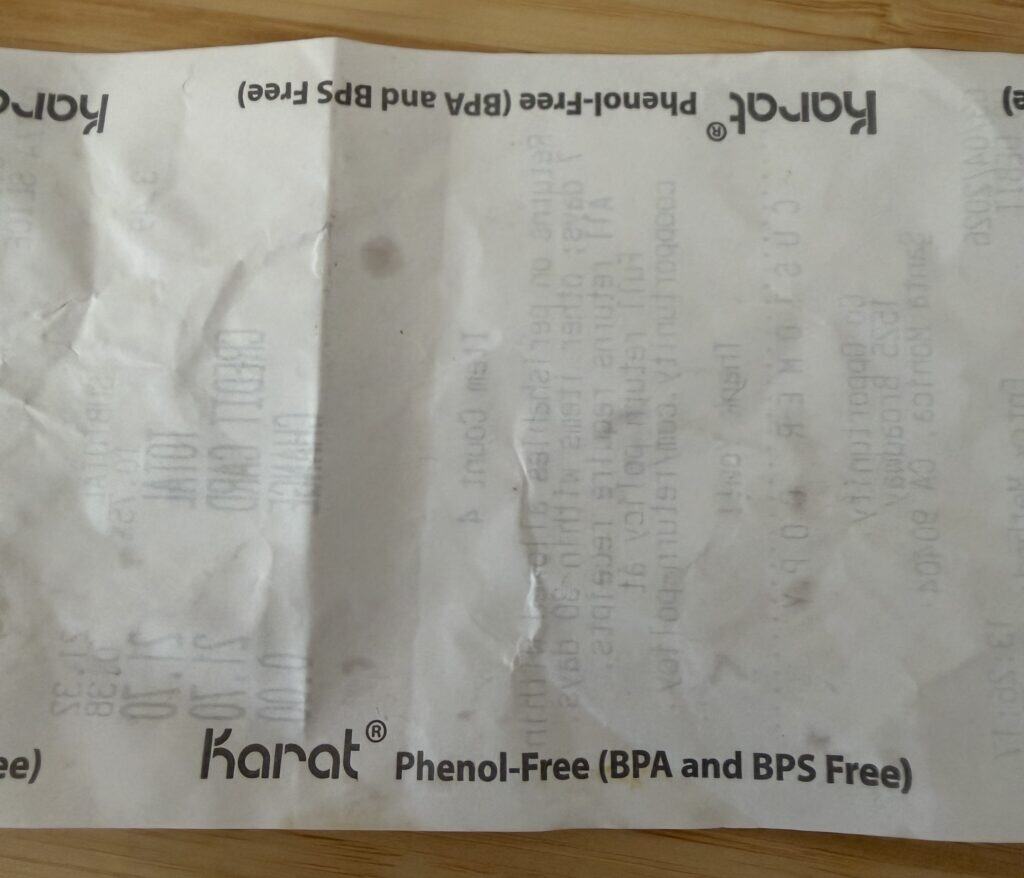
Thermal printing is used for receipts because it is inexpensive. Instead of ink or toner, the paper itself is chemically treated to react to heat during printing. Although ordinary paper pulp is used, the chemical coating is where the concern lies. Multiple layers, including leuco dyes, developers (BPA and BPS), sensitizers and stabilizers are applied to the surface. As the paper passes under the printer head, heat triggers reactions within these layers, producing the darker, readable images on the paper.
Policy and regulation
When BPA faced global scrutiny over the past decade, many manufacturers pivoted to BPS. They needed an immediate replacement so they could market products as “BPA-free.” Europe was among the first regions to recognize the risks tied to thermal receipt paper. Regulators did not eliminate bisphenols entirely, but acknowledged that printed receipts required oversight. France and Belgium moved toward digital default systems for many retail transactions. Japan shifted to non-phenol alternatives—developers that do not rely on phenol-based chemicals such as BPA or BPS—for several major retail chains.
In the United States, regulation of bisphenols in thermal paper varies by state rather than at the federal level. There is no nationwide rule requiring retailers to disclose which chemical developer their receipt paper contains, and labeling practices remain inconsistent. Some stores have switched voluntarily to phenol-free paper because consumer demand has pushed for safer alternatives.
A handful of states have taken more direct action. California’s Proposition 65 requires warning labels for thermal paper containing BPA or BPS. Suffolk County in New York enacted similar rules, and Washington state banned bisphenol-based thermal paper starting January 1, 2026. Several other states have introduced legislation over the years. While many states have restrictions on BPA for certain products, very few have addressed bisphenols in receipt paper specifically.
Other developers, including Bisphenol F (BPF) and related phenol compounds, have also entered the market, though far less toxicity research exists on these alternatives. In California, the rules have tightened and thermal receipt paper is now specifically regulated. The passage of AB 2244, sponsored by A Voice for Choice Advocacy, prohibits BPA in thermal paper as of January 1, 2025, and bans all intentionally added bisphenols as of January 1, 2026, making it one of the strongest state-level protections against everyday bisphenol exposure in the country.
Importantly, scientists do not need to guess whether bisphenols leave receipt paper. They can measure them directly on the skin. In 2014, researchers at the Swiss Federal Institute of Technology tracked BPA transfer after brief handling of receipts. The results showed that bisphenols readily transferred to the skin of those handling them. Additionally, participants who first used hand cream or other moist substances on their hands absorbed even higher amounts of the chemicals into their skin. Switzerland eventually aligned with broader European restrictions, limiting BPA and many other forms of bisphenols in paper receipts as well as in certain food-contact materials.
Studies have detected BPS in the majority of receipts collected from major retail chains. This suggests thermal paper can be a significant non-dietary source of bisphenol exposure, particularly for workers who handle receipts repeatedly throughout the day. While no one study claims receipts alone drive negative health effects, they remain one of the most direct and controllable sources of chemical contact in daily life.
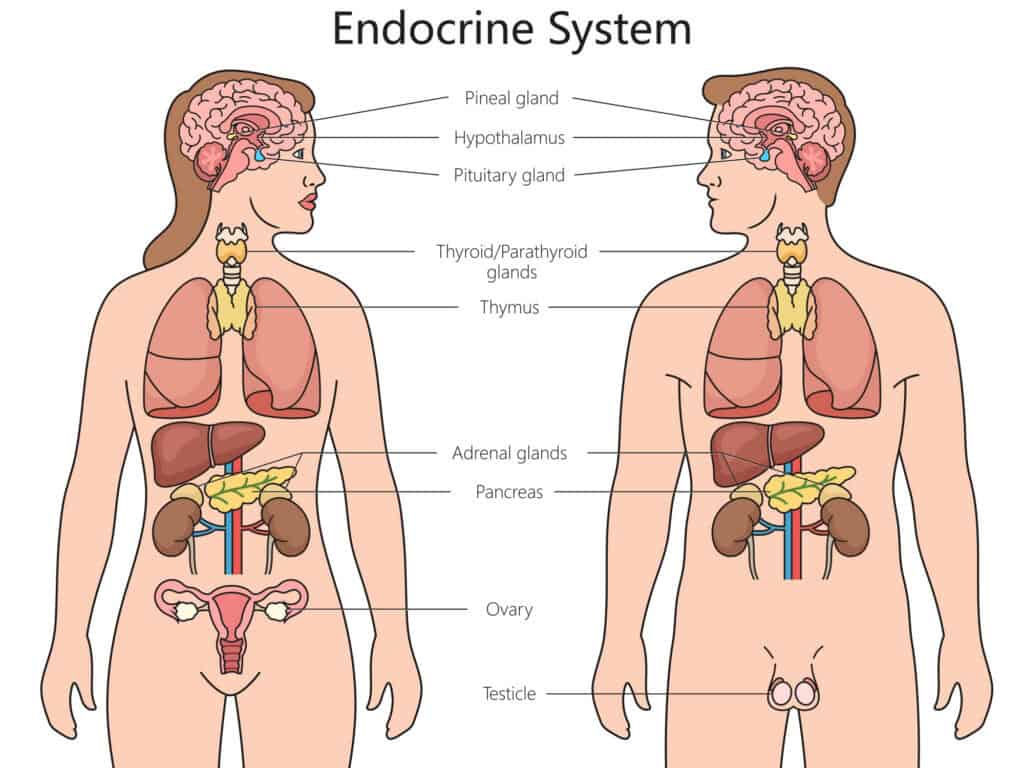
Health Impacts You Can’t Ignore
You don’t see hormones at work, but their effects unfold over time. They affect sleep, metabolism, fertility, temperature regulation, mood, immune response, memory, bone density and more. Bisphenols interfere with hormones in a variety of ways, many of which do not produce an immediate reaction like a rash or a cough. More specifically, they disrupt hormone signaling, which means their impact often emerges gradually across multiple systems in the body. Researchers have linked bisphenol exposure to a range of biological effects, including:
- Reproductive changes, including altered estrogen and testosterone activity, reduced sperm quality and changes in ovarian function
- Metabolic disruption, with associations to obesity and increased diabetes risk
- Thyroid interference, which can influence energy balance and temperature regulation
- Immune and cardiovascular impacts, including shifts in cholesterol and heart health
The Endocrine Society has consistently emphasized the importance of the endocrine system and the risks that arise when it is disrupted. The organization notes:
“Because of the endocrine system’s critical role in so many important biological and physiological functions, impairments in any part of the endocrine system can lead to disease or even death.”
Endocrine-disrupting chemicals mimic or block natural hormones, and the body misreads the signal. Hormones work through ongoing messages over time, so when contact occurs repeatedly, even at low levels, the body continues responding as if the signal were real. This is why chronic contact—such as regularly handling thermal receipts—matters more than occasional encounters.
Animal studies do not map perfectly onto humans, yet they can provide early evidence that potential harms may exist. In a recent study, “Hazard characterization of bisphenol A (BPA) based on rodent models – Multilevel meta-analysis and dose-response analysis for reproductive toxicity,” it is stated:
“Adverse effects of BPA exposure have been reported in both animal and epidemiological studies, including reproductive disruption, neurotoxicity, immunotoxicity and metabolic diseases.”
From the journal Molecular and Cellular Endocrinology, an analysis titled “Bisphenol S chronic exposure impairs pancreatic function and induces obesity in male mice independently of high-fat diet intake,” offers one of the clearest examples of how BPS may influence metabolism. Researchers exposed mice to chronic, low-level BPS and found that their pancreatic function shifted in ways that resemble early insulin resistance. When this exposure was paired with a high-fat diet, those metabolic disruptions intensified. The explanation was straightforward: even small, repeated contact with BPS altered glucose markers over time, and diet appeared to magnify the effect.
Who carries the greatest burden?
For most shoppers, contact with receipt paper is brief. For retail workers, it is routine. Grocery clerks, ticket takers, pharmacy techs and small business owners who manually tally sales may handle several hundred slips in one shift, creating repeated dermal contact throughout the day. In the study, “Higher dermal exposure of cashiers to BPA and its association with DNA oxidative damage,” it was concluded that “Urinary BPA levels increased significantly due to the dermal contact of receipts made with high BPA concentrations.” The chemical clears from the body over time, but repeated contact creates a cycle in which levels may not fully return to baseline. This makes receipt paper an occupational concern rather than solely a matter of individual choice. Few retail environments offer gloves, and even fewer provide alternatives or education about the receipt coating. For many workers, exposure is simply part of the job. This is ultimately a labor issue, not simply a lifestyle concern. Without protective options, responsibility for the risk falls on workers who may not have the ability to reduce it on their own.
Reducing contact should not fall solely on workers, many of whom are never informed about the materials they handle. Retailers and suppliers can choose phenol-free receipt paper and adjust their systems so receipts print only on request. For both workers and customers, identifying these safer alternatives is not always straightforward. While some receipts made without phenol developers may appear lighter or less glossy, there is no consistent color or texture that reliably indicates which developer is used. Without clear labeling or documentation, greater transparency is essential.
Beyond BPS
Even if BPS vanished tomorrow, the problem would not end. Producers have already begun using other bisphenol chemicals in receipt paper. Researchers have detected BPF and bisphenol-related polymers—including Bisphenol S–induced polymer—in receipts, and some samples contain more than one bisphenol at a time. If the chemistry changes again, the labels may shift, but the underlying issue remains. The coating still sits on the surface, and skin contact allows chemicals to transfer.
Replacing one bisphenol does not solve what receipts fundamentally are. They are single-use coated paper designed to deliver information you are unlikely to keep. After a brief moment of use, these slips move quickly into the waste stream. As treated paper breaks down, chemical developers can enter landfills, recycling streams and wastewater systems. Fortunately, reducing contact does not require complicated steps. Simple habits can limit exposure. Here are a few tips to minimize contact:
- Ask for digital receipts when available. If a store prints automatically, you can simply decline.
- Keep necessary receipts in one envelope rather than loose in pockets or in your purse or backpack. Handle them only when needed for returns, tax documentation or reimbursements.
- Wash hands before eating, and after unpacking groceries if you grabbed receipts along the way.
Something meant for your convenience has become another health concern. If you choose to skip the slip, you eliminate one avoidable point of contact that never needed to exist. Change begins with awareness and choice. By opting for digital receipts, supporting retailers that use safer alternatives, and advocating for clear labeling, you become part of that shift. You have the right to know what you touch and what your body absorbs. Don’t let this tiny piece of paper remain an invisible source of chemical exposure at the checkout counter.
~
Published on March 12, 2026.
If you’ve found value in this article, please share it!
To support the research and health education of AVFC editorial, please consider making a donation today. Thank you.
