






Written by Jennifer Wolff-Gillispie, HWP, LC
Edited by Nicki Steinberger, Ph.D.
EDITOR’S SUMMARY: Massage has evolved from ancient medicine to modern physiology. Across systems—from circulation and immunity to hormones, fascia and even cellular energy—touch delivers measurable changes supported by decades of research. This discussion centers on how the body responds internally under the care of a capable practitioner.
You step into the softly lit treatment room, taking in the familiar spa cues—candles, lavender and gentle music—wondering whether the experience will offer something deeper than simple relaxation. Massage has long been dismissed as indulgence or fluff, but as your muscles begin to yield under skilled hands, you sense something far deeper stirring. This is not mere pampering. It’s a practice that has persisted across millennia, bridging traditions, continents and centuries—a dialogue between your body and the subtle intelligence of touch.
Long before modern science charted muscles, joints and the body’s inner workings, cultures across the world used hands-on healing as medicine. In India 5,000 years ago, healers documented Abhyanga within Ayurveda—the prescribing of oil-based massage to restore balance, circulation and vitality. Ancient Egyptians immortalized massage in tomb paintings, showing its use for both healing and ritual. Hippocrates, 2,400 years ago, insisted: “Anyone wishing to study medicine must master the art of massage.”
Across the globe, Chinese practitioners traced meridians and applied pressure long before maps of anatomy existed. Centuries later, Swedish massage formalized gentle, rhythmic techniques like effleurage (long, gliding strokes) and petrissage (kneading and lifting of soft tissue) to promote circulation and flexibility. Thai massage, rooted in India, blended stretching, compression, and acupressure, while Shiatsu in Japan focused on harmonizing energy pathways through finger pressure. Even hundreds of years ago, the Aztecs and Indigenous peoples of the Americas practiced massage, easing lumbago (lower-back pain) and rheumatism (chronic pain or stiffness in joints and soft tissues) with ancestral knowledge. Despite originating from different corners of the world, these traditions converge on a single truth: touch remains one of the most enduring and transformative tools in human healing.
The role of physical medicine
Massage is part of a larger tradition often called physical medicine—therapies that work directly with the body’s structure and tissues to influence function. Unlike pharmacology, which relies on chemicals, or surgery, which alters anatomy, physical medicine uses applied force, movement and manual contact to shift physiology from the outside in. Chiropractic, physical therapy, osteopathic manipulation and massage (including myofascial approaches) all belong to this family.
What sets physical medicine apart is its immediacy: the intervention happens at the level of muscle, fascia, joints and nerves, and the body responds in real time. Circulation changes, lymph moves, muscle tone recalibrates and the nervous system adjusts its baseline state. Massage sits squarely in this lineage. It doesn’t override the body—it coaxes, guides and reconnects systems that already know how to respond.
For many people, this distinction is subtle but important. Physical medicine isn’t mystical or secondary; it’s a form of healthcare built on biomechanics, physiology and the body’s innate responsiveness to touch and movement. Massage thrives here because its tools—pressure, warmth, rhythm and contact—communicate directly with tissues and systems that are designed to listen.
Although massage spans many traditions, each method meets a different kind of need—often the kind that builds over time in daily life. Swedish techniques suit you when your system feels overloaded from constant input, when your shoulders creep upward during the day or your mind won’t downshift at night. The long, rhythmic strokes help your body exhale and recalibrate. Deeper structural work—whether deep tissue or myofascial release—often becomes the right choice when you’re carrying chronic tightness: the laptop-induced neck ache, the low-back grip that flares during stress, the old injury that never fully let go. These techniques address the patterns your body repeats without meaning to.
Thai massage helps when you feel compressed or restricted from too much sitting, long drives, travel or workouts that tighten rather than lengthen. The stretching and gentle traction create space where your tissues feel crowded. Shiatsu and other pressure-based approaches can be grounding when your energy feels scattered from rushing, multitasking or emotional strain. Their steady, rhythmic pressure along specific points helps organize your system from the inside out.
The Journey From Skin to Cell
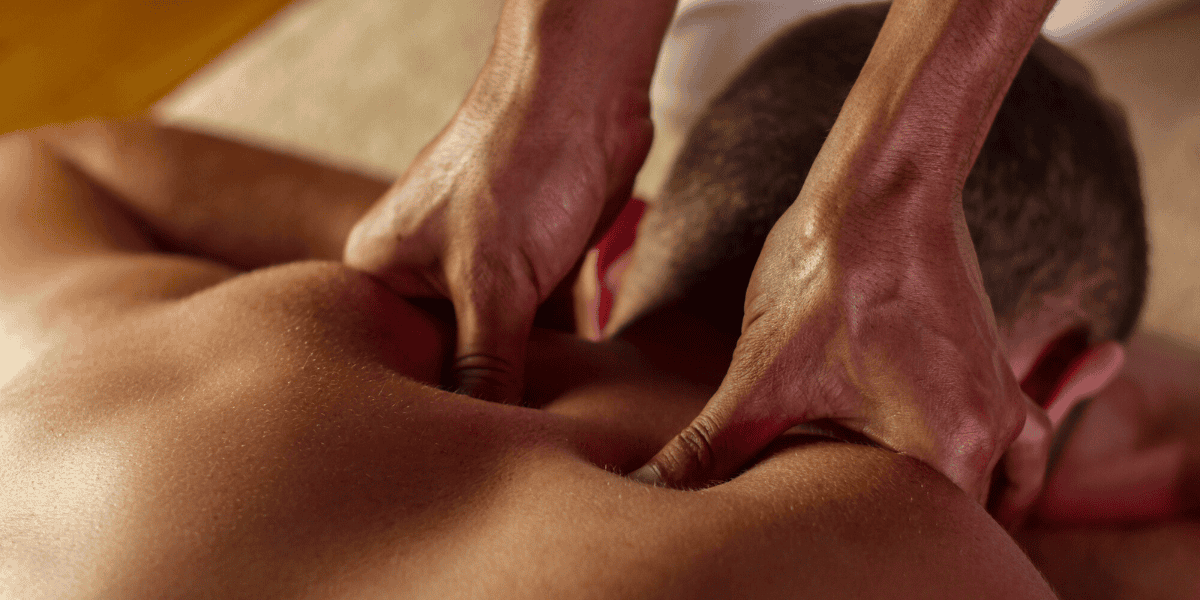
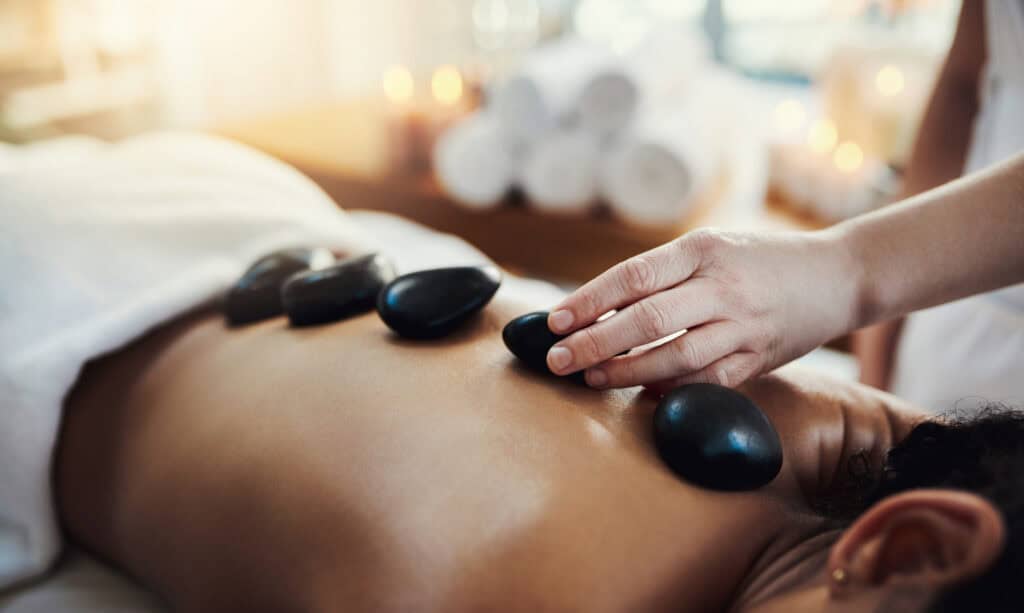
As your massage therapist’s hands travel across your shoulders, you may sense the subtle exchange between your tissues and the pressure guiding each release. Effleurage warms, petrissage kneads, friction stimulates, and tapotement delivers light rhythmic percussion. Some therapists incorporate heated stones as well, using gentle warmth to soften superficial layers of tissue and prepare muscles for deeper work. What feels like simple contact is anything but basic. Through mechanotransduction—the process by which cells convert mechanical force into electrical and chemical signals—your tissues begin responding at the cellular level. Lymphatic flow accelerates, circulation rises and immune cells awaken. This isn’t speculation. Studies show that preterm infants who receive massage experience increased natural killer cell activity and weight gain. In healthy adults, Swedish massage shifts immune markers and lowers cortisol levels. Your body becomes a living laboratory, responding to each stroke as it happens.
Under attentive touch, your cardiovascular system begins to recalibrate. Blood pressure drops, recovery from surgery can quicken and lymphatic drainage supports detoxification. Foot and calf work enhance vascular function, reducing the risk of deep vein thrombosis. Thoracic and accessory muscle release expands respiration, while abdominal and sacral work influence digestion, kidney function and metabolic activity.
Your skeletal system also answers the call. Better alignment, improved posture and even increased bone turnover have been documented. Postmenopausal women receiving Thai massage show elevated biochemical markers linked to bone activity. Fascia, the connective tissue network beneath the skin, loosens and reorganizes. Myofascial release—a soft-tissue therapy that works specifically with the fascia—triggers piezoelectric signals—tiny electrical charges that subtly influence tissue repair and nervous system function. With each deliberate press, you aren’t merely unwinding—you’re participating in a conversation with your body’s internal intelligence.
Your nervous system responds in tandem. Swedish and Lomi Lomi massage activate your parasympathetic pathways, slowing your heart rate, reducing cortisol and deepening sleep. Brain imaging confirms decreased activity in stress-related regions during and after sessions. Pressure receptors beneath the skin stimulate your vagus nerve, signaling the body to calm. Patients recovering from stroke or brain injury benefit from improved blood flow and renewed support to neural pathways. Heart rate variability—the measure of how well you adapt to stress—often rises.
These shifts in the nervous system can also bring emotion to the surface. When long-held tension softens, the body moves out of vigilance and into safety—and sometimes that transition opens the door to stored emotion. You might find yourself tearing up unexpectedly, feeling waves of relief or noticing memories come forward. This isn’t dramatic or unusual; it’s a sign that your body is letting go of patterns it has carried for a long time. Touch can access places the mind has learned to guard. A responsive practitioner holds space for this without judgment, allowing you to breathe through whatever rises and settle back into yourself with more clarity and ease.
Massage also influences your endocrine system. By lowering cortisol, it helps regulate hormones and strengthens stress resilience. Targeted techniques, especially abdominal work, can aid thyroid function and boost insulin sensitivity. Because hormonal and immune systems are intertwined, balancing one can uplift the other. Even one massage can shift immune activity, helping your body respond more effectively to infections or other challenges.
In landmark research from Cedars-Sinai titled “A preliminary study of the effects of a single session of Swedish massage on hypothalamic-pituitary-adrenal and immune function in normal individuals,” researchers found that just one 45-minute Swedish massage produces measurable effects: reduced cortisol, lower arginine vasopressin and increased lymphocyte activity. Published in the Journal of Alternative and Complementary Medicine, these findings demonstrate that massage initiates changes deep within the body’s stress and immune pathways—far beyond what simple relaxation can explain.
Further evidence reveals an even more fundamental effect. Scientists from the Buck Institute for Research on Aging and McMaster University, in a study titled “Need an Excuse to Book a Massage? Research Shows It Reduces Inflammation and Promotes Growth of New Mitochondria Following Strenuous Exercise,” found that massage increases the production of mitochondria in muscle cells—boosting energy output, cellular repair and resilience. These tiny engines generate the energy that drives every function of your body. Increasing their number strengthens you at the most foundational level. Fascia, muscles, nerves, hormones and immune cells shift together, reflecting the body’s built-in capacity to respond as an interconnected whole.
A more recent animal study offers further insight into how massage can influence cellular energy systems. In a 2025 paper titled “Massage therapy modulates energy metabolism and alleviates skeletal muscle spasms in rats,” researchers at the Beijing University of Chinese Medicine observed that “electron microscopy revealed improved muscle ultrastructure and increased mitochondria” in muscle fibers after massage. The authors note that massage not only reduces circulatory and metabolic stressors but also improves muscle metabolism by regulating energy-related pathways. While this work is in rodents, it strengthens the idea that human bodies may be engaging similar mitochondrial responses.
These layered physiological shifts highlight why massage has endured as a healing practice across time. Dr. Tiffany Field, director of the Touch Research Institute, puts it plainly: “If people say massage works ‘because it makes you feel good’ … excuse me! Massage works because it changes your whole physiology.”
Choosing the right massage therapist
The quality of the session depends as much on the practitioner as the technique itself. The right person is someone with whom you feel safe, respected and at ease. When you’re searching for a therapist, start by looking for someone licensed in your state with training aligned to your goals—whether you want relaxation, deeper structural work or targeted attention for specific concerns. A brief consultation, even just a few minutes before the session, can reveal a lot. Notice whether they listen, ask questions about your goals or health history and honor your boundaries from the start. You’re not evaluating their personality as much as their presence and professionalism. It’s also reasonable to ask about the products they use. Many therapists offer natural oils or unscented options, and avoiding synthetic fragrances helps limit unnecessary chemical exposure.
Pressure is never a guessing game. A skilled practitioner welcomes feedback and adjusts without hesitation, whether you say, “A little less pressure there,” “You can go deeper on the shoulders,” or “That area feels tender—let’s go lighter.” You aren’t interrupting the flow; you’re shaping it. A good therapist treats your input as essential information, not inconvenience. Massage should never leave you feeling unsettled. If something feels off—whether it’s a technique, the amount of draping, the atmosphere or a comment that doesn’t sit right—you can stop the session immediately. A simple, calm line is enough: “I’d like to pause the session now,” or “This isn’t comfortable—let’s stop here.”
Ethical practitioners support you without question. If someone ignores your requests, touches areas you didn’t consent to or behaves inappropriately in any way, end the session and report it to the establishment or licensing board. Your comfort is not negotiable. The practitioner may be the expert in technique, but you’re the expert in your body. The right person understands that partnership and makes space for your preferences, questions and limits. When that alignment is in place, the work reaches its full potential.

The body remembers how to heal
As you rise from the massage table, you may feel lighter, transformed—not just in body but in possibility. Every massage becomes a natural recalibration, a reminder that your body’s restoration is the intersection of art and science. With each deliberate press, the body remembers how to release, repair and return itself to wholeness. Safety remains paramount: avoid massage directly over open wounds, active infections or recent fractures. Extra care is needed during pregnancy, cardiovascular conditions or cancer recovery, when techniques may be adjusted for comfort and protection.
Despite its benefits, massage can be difficult for many people to access. High costs, limited insurance coverage and the perception that it’s a luxury create real barriers. Even with HSAs (Health Savings Accounts) and FSAs (Flexible Spending Accounts) covering some sessions, the overall expense or logistics may remain challenging. These realities don’t diminish the practice’s value—they simply highlight how meaningful even occasional bodywork can be when it’s within reach. A single session can shift physiology, calm the nervous system and remind the body of its own capacity to restore itself.
~
Published on November 27, 2025.
If you’ve found value in this article, please share it!
To support the research and health education of AVFC editorial, please consider making a donation today. Thank you.