






By Kirsten Steinman
EDITOR’S SUMMARY: Wool has clothed humanity for thousands of years—breathable, biodegradable, renewable and remarkably durable. But the fiber in your sweater today bears little resemblance to what early shepherds gathered by hand. Industrial processing, synthetic blending, toxic dyes, pesticide treatments and selective breeding practices have transformed one of nature’s most functional materials into something far more complicated. The environmental toll is significant, animal welfare concerns are widespread, and certifications that promise otherwise don’t always deliver. When sourced with care—regenerative grazing, minimal processing, organic standards—wool remains one of the most extraordinary natural fibers available.
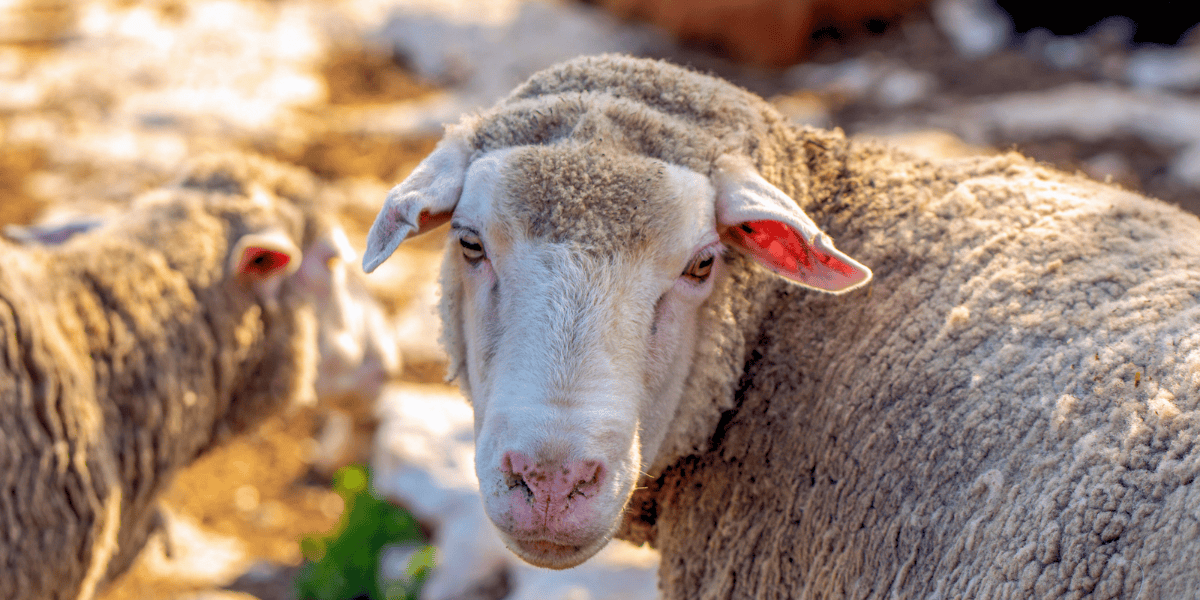
The first humans to gather wool had a laborious task at hand. They would bide their time until spring, when wild sheep would shed their soft undercoat by rubbing their bodies onto rocks, thorns, bushes and the ground. Early herding societies that kept sheep within their settlements developed manual plucking techniques for loose clumps of fleece known as “rooing.” These molted hairs would then be stuffed into footwear or matted together to create a warm rudimentary covering that trapped air, repelled water, absorbed water vapor and remained highly breathable. While rough, scratchy and uncomfortable for everyday wear, they helped ensure survival across extreme environments. Crude wool blankets and sheepskins made it possible for nomadic tribes such as the Mongols of the Eurasian Steppe to withstand both sub-zero winds and scorching desert sun.
Sheep were initially domesticated for their meat, milk and hides, with fiber considered only a secondary benefit. It would be thousands of years before sheep would be selected specifically for their wool quality, leading to the eventual phasing out of coarser hairs. Early wool production in Mesopotamia and Persia around 6000 BC involved primitive shearing tools—two blades joined by a spring—that carefully removed fleece from the sheep’s body. The wool was then skirted and sorted to remove debris and short fibers, before being spun by rolling tufts along the thigh and twisting them into thread by hand.
Wool was long revered for its warmth and durability. As finer breeds like Merino emerged, it broadened its reputation as both practical and luxurious. It is also biodegradable: when left in the soil, wool fibers break down after three to six months and release sulfur, nitrogen, potassium and phosphorus back to the earth, acting as an effective soil conditioner and fertilizer. At a time when growing attention is focused on synthetic textiles and microplastic exposure, natural fibers can seem like an obvious alternative. The picture, however, is more nuanced. Many wool products contain plastic-based fibers, while others carry environmental and animal welfare concerns that are far less apparent to consumers.
From Pastoral to Processed
Industrial processing entered the picture, and sheep went from naturally shedding animals to artificially bred commodities. Today, large-scale manufacturers cut corners by using short-staple fibers and harsh chemical treatments. These manufacturing methods help standardize production, yet the end result is a cheaply made garment that shrinks, pills and wears out far more quickly than it should. Coarse hairs are transformed into a machine-washable garment by means of conventional processing that employs toxic substances, heavy-metal dyes and plastic coatings. In order to make them stand up to machine washing, they are often treated with chlorine and then coated in a petroleum-based polymer to prevent matting.
While these processes can improve durability and produce a more consistent product, they also introduce additional chemical treatments that can diminish the fiber’s natural qualities and shorten its lifespan. This extends even to luxury wool fibers such as cashmere. High-quality cashmere, sourced from the soft undercoat of cashmere goats, typically requires minimal processing—washed with mild detergents before being spun into yarn. Lower-grade cashmere, by contrast, is often composed of shorter, coarser fibers that need to be chemically softened and treated with silicone-based finishes to mimic the feel of higher-quality material.
Modern wool products rarely exist in isolation, but within a larger textile ecosystem increasingly dominated by synthetic fibers. More than half of the wool produced today is blended with petroleum-based materials like polyester and nylon, which come with their own set of environmental concerns. Polyester, for example, is a spun plastic derived from fossil fuels through energy-intensive processes that generate significant greenhouse gas emissions. While it requires less land and water than natural fibers, it persists in the environment for centuries after disposal. In fact, the polyester in your yoga pants may take up to 500 years to fully break down, all while shedding microplastics and potentially releasing chemical additives into the environment.
Polyester accounts for more than half of all global fiber production. Nylon, another petroleum-based polymer, is manufactured through a similarly energy-intensive process and also takes hundreds of years to decompose, contributing to microplastic pollution as it breaks down in oceans and terrestrial ecosystems. These synthetic fibers, while often marketed as performance-enhancing and cost-effective, have become a dominant force in throwaway fashion—and a major driver of long-term environmental pollution.
Thousands of years ago, artisans would clean wool through a slow, painstaking process. Days and sometimes weeks were spent combing through raw fleeces, plucking out stubborn burrs and straw by hand. The fleeces were then soaked in warm water to release sheep oils (lanolin), grime and dirt. Some cultures used stale urine or plant extracts as early cleaning agents to break down stubborn debris. After drying in the sun, wool would be laid on wooden slats and beaten with thin branches to loosen any remaining seeds. The last stage was combing and carding, in which the wool would be drawn through fine-toothed combs or wooden hand cards.
In today’s fast-paced world of fashion, this process is too time-consuming to justify economically. As a result, manual labor has been replaced with industrialized methods such as carbonization, a treatment that rapidly removes stubborn plant materials using acid solutions, high heat and mechanical crushing. While remarkably effective, it introduces trace chemical residues such as sulfuric acid and sodium carbonate that may remain on the fabric and irritate your skin if you are sensitive to these substances.
Then there are the pesticides. Moths, beetles and other pests threaten every stage of the wool supply chain. Insects and parasites can degrade fleece quality through disease and physical damage. Sheep ticks and lice can cause animals to vigorously scratch, bite and rub against fences, reducing the overall weight and quality of the fleece fibers. In response, many carpet and textile companies resort to insecticides or insect-resistant agents, sometimes fully dipping sheep in pesticides before harvesting their fleece. While the health impact of residual pesticides on everyday wool garments is unclear, some studies have shown that pesticide residues in wool from major suppliers in Australia and New Zealand have declined to nearly zero—although traces may still remain. Washing wool items with gentle eco-friendly detergents by hand and drying them in sunlight may help break down any lingering chemical compounds over time.
The dyeing process is another major source of toxins. Commercial wool dyeing involves synthetic dyes, chemical auxiliaries and heavy metals like chromium and copper. Chromium VI, a known carcinogen, is frequently used as a dye fixative to ensure a deep bond with the fiber. Most conventional dyes are known to break down into aromatic amines, which are linked to endocrine disruption, skin allergies, respiratory problems and several types of cancer. Animal welfare concerns also shape the wool industry. Shearers are often paid by volume rather than by hour, which can incentivize speed over care. Poor handling practices have been documented, with one eyewitness telling People for the Ethical Treatment of Animals (PETA):
“The shearing shed must be one of the worst places in the world for cruelty to animals …. I have seen shearers punch sheep with their shears or their fists until the sheep’s nose bled. I have seen sheep with half their faces shorn off …”
Beyond day-to-day treatment, the production system has also influenced the very bodies of sheep themselves. Selective breeding has significantly altered their physiology, with Merino sheep in particular bred to produce dense, heavily wrinkled fleece to maximize wool yield. While advantageous for wool production, these traits can create serious health complications for the animals, including overheating and flystrike—a painful and dangerous condition where flies lay their eggs in folds of damp skin or wool. The eggs hatch rapidly into maggots that feed on the sheep’s flesh and can become life-threatening. For some producers, the solution is “mulesing“: carving wide strips of flesh off the sheep’s hindquarters to create scar tissue that’s less susceptible to fly infestation.
“Almost all Merino wool—from an ancient breed of hardy sheep—on the High Street comes from Australia and New Zealand, including anything labelled with the Woolmark logo, and unless a brand states its opposition to mulesing, it is likely to have been subject to the practice.”
These wounds often become infested with larvae before they can heal properly. Some shearers have been reported for crude negligence, sewing up wounds with no pain relief. Likewise, goats are frequently shorn in midwinter so manufacturers can meet market demand, which can be fatal for animals farmed in places like Mongolia and China where they are exposed to bitter cold.
Clever marketing has framed shearing sheep as a kindness—with fleece as just a welcome byproduct. Yet the sheep’s primary ancestry, the wild mouflon, needed no intervention to survive. The reality is that selective breeding has put modern sheep at the mercy of humans. And while some farms operate under high welfare standards, conditions vary widely across regions and production systems, with some involving starvation and harsh physical handling to make shearing quicker.
The Cost the Label Doesn’t Show
When manufactured on a large scale, wool is more ecologically complex than its natural fiber reputation suggests. The not-for-profit organization Made-By Environmental Benchmark for Fibres ranked mass-produced wool as a “Class E” fiber—the worst category possible—for its human toxicity, eco-toxicity, methane emissions, overgrazing, and water, land and energy use. By comparison, textiles that received Class A designation included recycled wool, organic hemp and recycled cotton. The International Wool Textile Organization makes claims about renewability and conservation, yet others tell a different story. Stephanie Feldstein, population and sustainability director at the Center for Biological Diversity and author at Collective Fashion Justice, says:
“The fashion industry has tried to pass wool off as a sustainable alternative to synthetics, but that claim quickly unravels when you take a closer look. Even 100 percent wool fiber production leads to deforestation and threatens wildlife. There are real eco-friendly materials out there, but wool isn’t one of them.”
An analysis of mainstream clothing brands revealed that 55 percent of wool items examined were blended with fossil-fuel-based synthetic fibers, with mass-market retailers being the biggest offenders. Even luxury knitwear brands were found to be cutting their wool with other materials. A 2021 report found that one kilogram of wool can create as much climate pollution as driving more than 100 miles, and a single Australian bale uses up to 367 times more land than cotton. These figures vary significantly depending on grazing intensity, land management and regional practices.
This can be daunting information for the eco-conscious shopper, but there is a silver lining—you just have to do a bit of digging. The American Sheep Industry Association offers resources on small, ethically-minded mills in the United States, and the American Wool Council can help guide you toward brands that prioritize regenerative grazing—a nature-mimicking management approach that uses livestock as a tool for restoring soil health and supporting thriving habitats for wildlife and pollinators. When managed well, sheep grazing in forested systems can contribute to healthier tree growth and ecosystem balance. Rotational grazing—moving sheep frequently through pastures—combined with practices like windbreak planting (the strategic arranging of shrubs and trees to slow wind speed) can further protect biodiversity. These methods also have downstream benefits for waterways, helping reduce sediment runoff and nutrient pollution that can otherwise disrupt marine ecosystems.
ZQ Merino is a premium wool certification program that aims to guarantee social responsibility, ecological sustainability, traceability and ethical animal welfare standards. Responsible Wool Standard is another designation designed to improve transparency around animal welfare and land management, though it does not guarantee variability in enforcement or sourcing—and inspections are announced in advance. In 2024, an undercover investigation by PETA Asia into eleven ZQ-certified farms in New Zealand discovered that ethical standards were not being followed and routine violence was taking place. Even certified supply chains can include mixed or blended fibers, so while oversight is helpful, it’s not absolute. Ethically sourced Merino wool can also be found in the United States.
When in doubt, look for organic certifications. They remain one of the most reliable ways to ensure wool has been produced with fewer toxic chemicals and contaminants. The leading global certification is Global Organic Textile Standard, which evaluates organic farming practices, ethical labor standards and restrictions on substances such as heavy metals, synthetic dyes and formaldehyde. Another widely recognized certification is OEKO-TEX Standard 100, which screens finished textiles for phthalates, azo dyes, formaldehyde and other potentially hazardous chemicals. To carry either label, products must pass testing at multiple stages of production—sometimes down to the dyes, threads, prints and zippers themselves. Both certifications rely on independent laboratory testing and annual reviews, often using safety thresholds that exceed local regulatory standards. For lower-impact options, seek out artisan wool colored with plant- and mineral-based dyes rather than harsh chemical treatments.
When Wool Gets It Right
Even with the shadows of modern consumerism and synthetic blending threatening the character of the fiber, raw wool’s profile is largely unsurpassed. Antimicrobial, UV-protective, renewable, biodegradable, fire-safe, pest-resistant, suitable for all seasons, anti-allergenic and able to withstand up to 20,000 bends without breaking, it can last generations. That wool sweater you pass down to your daughter can be enjoyed by her own children. It is one of the most repurposed and recycled textiles on the planet. And when sustainably and organically farmed, and processed without toxic dyes or chemical treatments, it remains one of the best choices for bedding, mattresses, comforters, clothing, and even insulation.
These intrinsic properties have made wool a material of ongoing interest in medical and clinical textiles. It is breathable, moisture-regulating, and capable of maintaining a stable microclimate against the skin—qualities that are especially important in wound care and long-term skin contact. Wool-based dressings and engineered fibers are being explored in tissue-support environments, where biocompatible materials help promote optimal healing conditions. Australian medical sheepskins are a popular choice in hospitals and nursing homes, where their cushioning and moisture-wicking properties help reduce pressure points and prevent bedsores. Finely processed Merino wool is also incorporated into medical garments and hospital textiles designed for prolonged wear, offering both odor control and breathability.
Beyond clinical use, ultra-fine Merino wool is widely used in clothing intended for sensitive skin. Its ability to regulate temperature and wick moisture can make it more comfortable than many conventional fabrics, particularly in infant clothing and bedding. In some cases, wool is blended with silk to enhance softness while maintaining its thermoregulatory benefits, creating a natural textile that is both functional and gentle against the body. These applications reveal an important distinction: wool is not inherently good or bad, but highly dependent on how it’s processed, sourced and used. The same fiber that can exist in a highly industrial, chemically intensive supply chain can also exist in systems that prioritize minimal processing, animal welfare and ecological stewardship.
Choosing a fiber often means balancing competing priorities, from durability and performance to environmental impact and animal welfare. Understanding how something is made, and the true cost behind its production, can help you make more informed decisions rather than simply accepting marketing claims. Your choices matter, even if they seem small. Be intentional: support small, local farms, regenerative grazing practices, transparent supply chains and organic or minimally processed fibers whenever possible. Wool is just one option. Other natural fibers, such as organic cotton, hemp and linen, are also worth considering. These materials are durable, breathable and can reduce your reliance on synthetic fabrics that may contain chemical additives or shed microplastics during use.
Rather than filling your closet with disposable seasonal pieces, consider investing in a smaller collection of thoughtfully made garments designed to last. In a culture built around convenience and excess, this transition takes time, but well-crafted unprocessed fibers often become more meaningful with age. They are the kinds of wardrobe staples that can be repaired, reused and eventually passed down for generations.
~
Published on July 16, 2026.
If you’ve found value in this article, please share it!
To support the research and health education of AVFC editorial, please consider making a donation today. Thank you.